
Introduction-
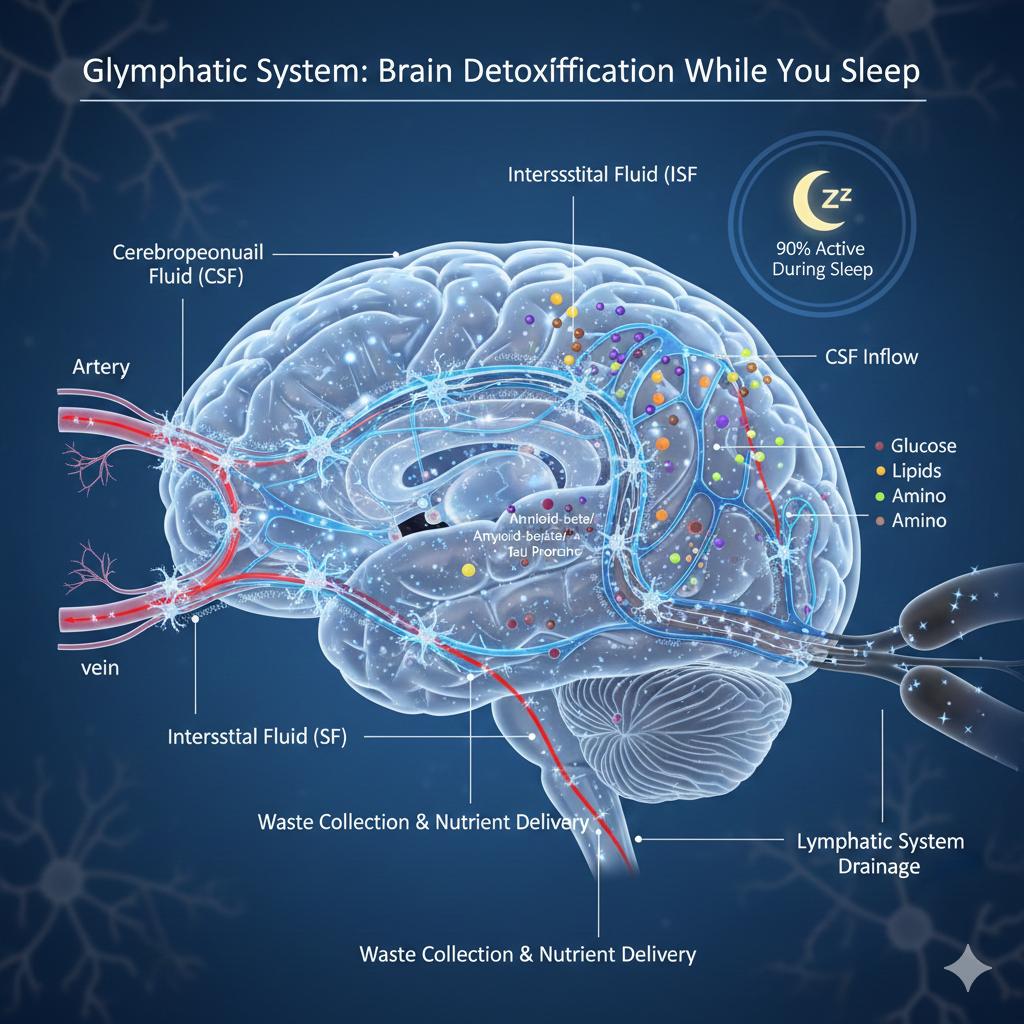
Have you ever noticed how a good night’s sleep leaves you feeling mentally lighter, clearer, and more focused? This refreshed sensation is not accidental. It is the result of a powerful biological process that takes place inside your brain while you sleep. This process is driven by the glymphatic system — a specialized network responsible for clearing metabolic waste and maintaining brain health.
Why the Brain Needs Cleaning-
The brain is one of the most energy-demanding organs in the human body. Every time you think, learn, work, experience emotions, or solve problems, your brain consumes glucose to generate electrical and chemical signals. This constant activity produces metabolic waste as a byproduct.
If these waste products accumulate, they can interfere with normal brain function. Over time, buildup may contribute to cognitive issues such as brain fog, memory problems, inflammation, and potentially increase the risk of neurodegenerative conditions such as Alzheimer’s disease and Parkinson’s disease.
How the Glymphatic System Works-
The glymphatic system relies on cerebrospinal fluid (CSF), a clear protective liquid that surrounds the brain and spinal cord. This fluid acts as a cleansing medium, flowing through channels around blood vessels and penetrating brain tissue.
The rhythmic pulsing generated by the heartbeat and breathing helps push cerebrospinal fluid through these pathways. As the fluid moves through brain tissue, it collects waste products and transports them toward the lymphatic system for removal from the body. This process functions much like an internal washing system for the brain.
The Critical Role of Deep Sleep-
The glymphatic system is most active during deep sleep. During this stage, brain cells relax and shrink slightly, creating more space between them. This expansion allows cerebrospinal fluid to circulate more efficiently, enhancing waste removal.
Poor sleep, late-night screen exposure, and frequent sleep interruptions can reduce the effectiveness of this cleaning process. In contrast, consistent, high-quality sleep supports optimal brain maintenance.
What the Glymphatic System Removes-
The system plays a crucial role in clearing harmful substances from the brain, including amyloid-beta proteins, tau proteins, lactic acid, excess potassium, and other metabolic byproducts. Regular removal of these substances helps protect cognitive function and long-term neurological health.
Beyond Cleaning: Nourishment and Repair-
In addition to waste removal, the glymphatic system supports the delivery of essential nutrients. These include glucose for energy, healthy fats, amino acids, and neurotransmitters that facilitate communication between brain cells. Thus, while you sleep, your brain is simultaneously cleansing, nourishing, and repairing itself.
The Importance of Hydration-
The brain is composed of approximately 75 percent water. Even mild dehydration can impair concentration, increase fatigue, and slow mental processing. Proper hydration supports healthy cerebrospinal fluid movement, which in turn enhances glymphatic efficiency.
Factors That Can Impair Glymphatic Function-
Several lifestyle and physiological factors may reduce glymphatic performance. These include chronic sleep deprivation, excessive nighttime screen exposure, prolonged stress, lack of physical activity, dehydration, and natural aging. As deep sleep tends to decline with age, maintaining sleep quality becomes increasingly important.
How to Support Your Brain’s Detox System-
Simple daily habits can significantly enhance glymphatic function. Aim for seven to eight hours of quality sleep, reduce blue-light exposure before bedtime, exercise regularly, stay properly hydrated, consume balanced meals, and manage stress effectively. Some research also suggests that side-sleeping may support more efficient fluid flow.
Conclusion-
The glymphatic system plays a vital role in maintaining cognitive clarity, emotional balance, and long-term neurological health. Each night, while you rest, your brain enters a maintenance phase — cleaning accumulated waste, delivering nutrients, and repairing cellular structures. Prioritizing sleep, hydration, and healthy lifestyle habits allows this remarkable system to function at its best, supporting sharper thinking and overall brain resilience.


40 Comments
This was a great reminder for me. Thanks for posting.
Great post! I’m going to share this with a friend.
This is one of the best explanations I’ve read on this topic.
This gave me a lot to think about. Thanks for sharing.
I appreciate the real-life examples you added. They made it relatable.
I appreciate your unique perspective on this.
Thank you for putting this in a way that anyone can understand.
I appreciate the honesty and openness in your writing.
I appreciate the real-life examples you added. They made it relatable.
This was a very informative post. I appreciate the time you took to write it.
Thank you for sharing this! I really enjoyed reading your perspective.
It’s great to see someone explain this so clearly.
This is now one of my favorite blog posts on this subject.
You’ve clearly done your research, and it shows.
I’ll definitely come back and read more of your content.
This was easy to follow, even for someone new like me.
Your content never disappoints. Keep up the great work!
Thank you for sharing this! I really enjoyed reading your perspective.
Such a refreshing take on a common topic.
I’ve bookmarked this post for future reference. Thanks again!
I like how you presented both sides of the argument fairly.
This gave me a whole new perspective on something I thought I already understood. Great explanation and flow!
Great article! I’ll definitely come back for more posts like this.
It’s great to see someone explain this so clearly.
I appreciate the honesty and openness in your writing.
What a helpful and well-structured post. Thanks a lot!
This was easy to follow, even for someone new like me.
Great post! I’m going to share this with a friend.
Your articles always leave me thinking.
What I really liked is how easy this was to follow. Even for someone who’s not super tech-savvy, it made perfect sense.
I enjoyed your take on this subject. Keep writing!
You clearly know your stuff. Great job on this article.
I appreciate the depth and clarity of this post.
This was a very informative post. I appreciate the time you took to write it.
Your thoughts are always so well-organized and presented.
I’m definitely going to apply what I’ve learned here.
This helped clarify a lot of questions I had.
I appreciate the real-life examples you added. They made it relatable.
I’ve bookmarked this post for future reference. Thanks again!
This helped clarify a lot of questions I had.