
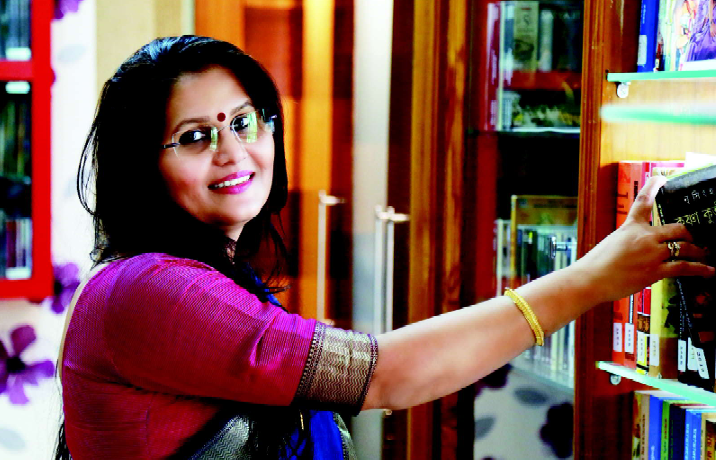
Some lives are written by comfort and some others written by courage. Life has showed calamity but mind never abandoned the aspiration. Struggle is her path, service is her motto and creativity is her passion. For why she is now not only successful but also a perfectionist. Dr Itirani Samanta who born into a world where certainty was scarce and survival demanded courage long before dreams were allowed. Raised in a remote village of Odisha by a widowed mother, in conditions where hunger often spoke louder than hope, her early years were shaped not by privilege but by perseverance. Yet, even in deprivation, something luminous took root—an unspoken understanding that education could liberate, words could heal and culture could endure.
What distinguishes Dr. Samanta is not the multitude of paths she has walked—engineering, literature, journalism, cinema, education, handloom, social reform—but the moral continuity that runs through them all. Each pursuit, though distinct, flows from a single conviction: that dignity is not granted by society—it must be reclaimed through voice, visibility, and work. She did not merely escape poverty.
She returned to it with solutions.
Her academic journey defied convention. Trained first as an Electronics & Telecommunication Engineer, she chose stability to support her family—but her heart belonged elsewhere. Literature kept calling. Answering it meant starting again. She went on to earn A postgraduate degree in odia literature, a master’s in mass Communication & advanced journalism and finally, a Ph.D. in literature from visva-bharati, Santiniketan. Then she awarded with Junior and Senior Fellowships by the Ministry of Culture, Government of India. In the year 2000, when most Odia magazines were shutting down, Dr. Samanta took a bold gamble. With little capital but immense conviction, she revived ‘The Kadambini’, transforming it into Odisha’s largest and most influential monthly family magazine. Under her editorship, The Kadambini became more than a publication—it became a social movement.
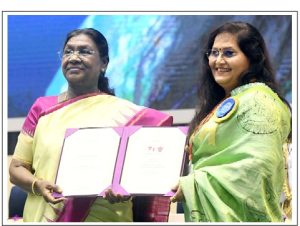
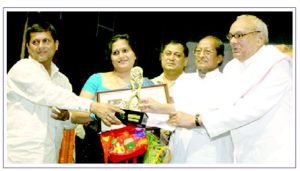
As a two-time National Award-winning film producer, Dr. Samanta used cinema as a tool for social reflection. Then Shephalee is her another credibility, where memory Becomes Fabric. Mentionable it is the designer house, a luxury handloom brand named after her mother’s cherished nickname. Next part Shephalee is a tribute to Odisha’s weaving heritage, a livelihood platform for artisans and weavers, a statement against fast fashion and a blend of heritage and modern elegance.
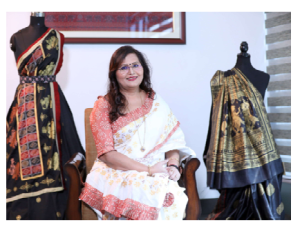
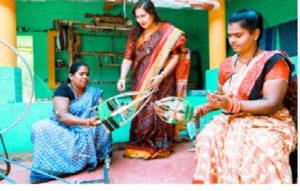
It is acceptable that Dr. Itirani Samanta’s journey is not about personal success alone—it is about lifting ecosystems. Whether through magazines, cinema, classrooms, looms or villages, her mission remains constant: to give voice where silence was imposed, to create opportunity where despair once lived, and to ensure culture survives—not as nostalgia, but as power. From hunger to heritage, from survival to service—her life is not just a story. It is a legacy in motion. So, let’s now engage in a meaningful conversation with Dr. Itirani Samanta to understand her journey, vision and enduring impact.
THE MORAL-:
Q1-Madam! At first, we want to keep a glance toward your earlier stage of life, you grew up amid financial hardship and social constraints. Was there a moment in your early life when you almost accepted limitation as destiny and what triggered that inner rebellion?
DR ITIRANI SAMANTA-
There was a time when limitations felt almost normal, as if they were meant to define the boundaries of my life. Growing up amid financial hardship and rigid social expectations, you are taught very early to adjust, to stay quiet, and not to dream too loudly. For a brief phase, I too believed that perhaps this was destiny and that acceptance was strength. But somewhere inside, there was a constant unease. What triggered my inner rebellion was not a single dramatic moment, but a slow, painful realization. I saw talent, effort, and powerful stories around me being ignored simply because of circumstances. That silence felt deeply unjust. Education, books, art, and cinema became both my refuge and my awakening. They introduced me to worlds where voices mattered and narratives had the power to change realities. Over time, I understood something very clearly, accepting limitation was not humility; it was surrender. I chose to rebel quietly at first, by learning, by creating, by questioning. I stopped measuring myself against what others could or could not do. A thought that stayed with me deeply was:
“KIE KANA KARI PARILA, MU KANA KARI NAPARILI SE BISAYARE AJATHARE CHINTA NAKARI, KANA KALE MU AAU BHALA KAAMA KARIPARIBI SE BISAYA RE BHAABIBA BARANG BHALA”
It means—Instead of unnecessarily worrying about who could do what and what I could not, it is better to think about what I can do to perform even better. I never rebelled openly, rather, I silently kept doing my work. I took everything as God’s wish and surrendered myself, but I never once accepted it as my fate or destiny. As I kept silently working, I believed that if I approached the things I cared about in the right way, I could improve. One thing we always had was education. Despite any situation, we strongly decided to pursue education, because in life, education always brings improvement. So I never surrendered or compromised when it came to education, though I surrendered in front of God. Since childhood, I never knew much about luck, faith, or God, but one thing I surely knew was that if you work on something with deep passion and pursue it with all your strength, you will succeed.
That shift in thinking changed everything. Slowly, that quiet rebellion became my life’s purpose, to challenge inherited boundaries and to create spaces where stories, especially those from the margins, could stand tall and be heard. My story is a reminder that the future is not a distant reality. It is a living, breathing space that we shape every day through our choices, our determination, and the courage to dream beyond what we are told is possible.
THE MORAL-:
Q2-Struggle often teaches lessons which success cannot. What is one painful truth poverty taught you that still silently guides your decisions today?
DR ITIRANI SAMANTA-
My life started in a village where I was surrounded by darkness. Since childhood, my most painful truth was poverty. It was a truly humble stage of life, where even the most basic essentials—good food, proper clothing, and education, were not available to us and felt like distant privileges. We lived in a deep darkness, where we couldn’t receive even the slightest ray of light. Yet, amid all this, I carried a belief within me that I would surely do something, rise above my situation, and find my own success. As I quoted in one of my story ‘Barsha Bandhabi’, whenever barsha (rain) came to the earth, it always touched me first, it hugged me and poured on me even before touching the ground, through the holes in our ceiling during my humble days. I used to complain to my mother, asking why the rain disturbed me so irritatingly. She would smile and say, “See, even when our relatives don’t look at us because of our poverty, barsha comes and hugs you immediately every time she comes. So think—who is your real friend?” She used to hug me first then, but now she cannot hug me right away anymore. That poverty was my deep darkness, it grasped everything and kept me away from opportunities. But even within that deep darkness, since childhood, I carried a spark inside me. Though the world around me denied light from every direction, that spark guided me, motivated me, and continues to guide me even today. That spark may be called hope, dream, or faith, you can name it anything. From those early days, I dreamed of bigger things, breaking stereotypes and glass ceilings. I would call that spark passion.
THE MORAL-:
Q3-From engineering to literature how was the journey which makes you today as successful woman?
DR ITIRANI SAMANTA-
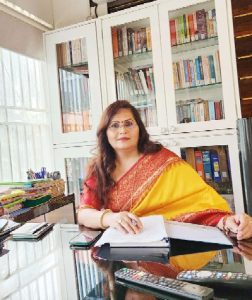
From a very young age, I was deeply drawn to stories, words, and the quiet power of creative expression. Writing, storytelling, and observing life around me came naturally, and I felt an instinctive urge to engage with our art, language, and literary heritage. Over the last twenty-six years, I have worked closely with art, literature, language, and cinema, not just as fields of work but as living traditions that needed care, voice, and celebration. Engineering shaped my mind. It taught me structure, discipline, and how to think logically, solve problems, and remain grounded even during chaos. Literature, on the other hand, shaped my soul. It gave my heart a language to feel deeply, to question fearlessly, and to express honestly. One trained my mind to stand firm, the other allowed my spirit to fly. This journey from engineering to literature was not a shift but a synthesis. Today, the woman I am stands at the intersection of both. I think with clarity and structure, and I create with emotion and purpose. That balance has defined my work, my resilience, and my ability to build something meaningful that carries both intellect and soul.
THE MORAL-:
Q4-How did womanhood and leadership intersect in shaping your identity?
DR ITIRANI SAMANTA-
Womanhood and leadership did not come to me as separate identities. They grew together within me, shaped by what I witnessed and lived through. I grew up watching my mother, a complete woman, rich in virtues in every sense, who carried the weight of responsibility on her shoulders. Extreme poverty was a constant presence in our lives, and yet she never allowed despair to define us. With several children to care for and very little means, life was difficult and often painful. But I never saw her surrender. She was very headstrong, resilient, and quietly powerful. She did not lead with authority or words, but through action, sacrifice, and unwavering dedication to building a better future for us. Watching her taught me that leadership does not always announce itself. Sometimes it exists in endurance, in courage, and in the ability to stand firm when everything around you is uncertain. That upbringing shaped my understanding of womanhood. I learned early that strength can be gentle and that compassion can coexist with firmness. As I grew into leadership roles, those lessons stayed with me. I lead with empathy because I have seen struggle up close. I take responsibility seriously because I watched my mother do the same without recognition or support. There was a time in my life when I attempted suicide many times, but each time my feet froze when I remembered my mother’s words,
“AKHA BULUTHAAI, CHAKA BULUTHAAI, BULI PADUTHAAI MAHI! SANSHARA BHITARE GHARA KARITHILE PATHRA PADILE BI SAHI”
It means – Patience is the most important virtue in life.
For me, leadership is not about power. It is about accountability, resilience, and lifting others as you move forward with you. My womanhood gave me sensitivity, patience, and emotional depth, while leadership gave those qualities direction and purpose. Together, they formed the foundation of who I am today.
THE MORAL-:
Q5-Literature today competes with short attention spans and digital distractions. As an editor of the most successful premier monthly magazine The Kadambini, we want to take your view that what exact responsibility does a serious editor carry in such a time?
DR ITIRANI SAMANTA-
As an editor today, I believe the responsibility is deeper than ever. We are living in a time of speed, noise, and constant distraction, where attention is fleeting and depth is often compromised. A serious editor must act as a guardian of meaning. Our role is not to chase trends blindly, but to protect the soul of literature while making it accessible to the present generation.
An editor must slow the reader down without forcing them, curate voices that matter, and give space to stories that carry truth, empathy, and courage. It is our duty to nurture writers, polish their voices without diluting their honesty, and ensure that quality is never sacrificed for instant consumption. We must create bridges between tradition and the digital age, using new platforms thoughtfully while keeping the integrity of language intact. As renowned poet, lyricist and literary maestro Javed Akhtar beautifully said, “Literature, art, cinema, music, and poetry are the vocal cords of society. They give voice to what people feel but cannot always say.” An editor, then, becomes the caretaker of those vocal cords. We listen carefully, we choose responsibly, and we speak with conscience. In times like these, editing is not just a profession, it is an act of cultural responsibility.
THE MORAL-:
Q6-Through Kadambini, you revisited epics like the Ramayana and Mahabharata. Do you see reinterpretation of mythology as a form of silent social resistance?
DR ITIRANI SAMANTA-
Yes, I truly believe reinterpretation of mythology is a quiet yet powerful form of social resistance. Our epics like the Ramayana and the Mahabharata are not frozen texts meant only for ritual reverence. They are living narratives that grow with society. When we revisit them with fresh questions, we are not challenging faith, we are deepening it. Through Kadambini, my intent was always to look beyond the familiar surface. Mythology holds a mirror to human behaviour, power structures, gender roles, duty, desire, and moral conflict. Through my work, I try to reinterpret and reimagine women characters from our epics. I closely study how they were portrayed in their time, what meanings they carried, and how much agency and voice they truly had. I am always drawn to these women, seeking them out, understanding them, and rediscovering them through my writing, so their stories can be seen with renewed depth, dignity, and relevance today. I believe-
“NAARI RA NIJASWA CHINTADHAARA ACHI, KARGYA PRANANI ACHI, SWADHINATA ACHI O SABU UPARE SWABHIMANA RA EBANG DRUDHATA RA NISPATI NEI TAAKU KAARGYA RE PARINATA KARIBARA KHYAMATA ACHI, SE KARGYA JETE KATHINA EBANG KASTADAAYAKA HEUPACHE | JUGE JUGE SRUSTIRA MANGALA PAAIN NAARI TAARA DAAITWA NIRBAHA KARI CHALICHI EBANG CHALITHIBA MADHYA | JUGE JUGE NAARI SAAJICHI EA SANSHARA RA UDHAARA KARTI”
It means –
A woman has her own way of thinking, her own approach to action, her independence, and above all, the courage and self-respect to take firm decisions and turn them into action, no matter how difficult the task may be. Across generations, for the welfare of creation and society, women have fulfilled their responsibilities and will continue to do so. Through ages, women have been the true saviours of this world.
Since ancient times, especially in our epics and mythological texts, women have never been passive figures. From the Ramayana to the Mahabharata, they stood with dignity, conscience, and moral strength, questioning injustice and upholding dharma. Whenever society underestimated them, history responded with transformation. What continues to inspire me is that then or now, women have always thought beyond themselves for family, society, and humanity. Their choices were guided by ethics, responsibility, and compassion. They were never weak, they were wise, courageous, and deeply farsighted.
In our epics, whichever female characters I have come across, they all were self-respecting. When we retell these stories through contemporary lenses, we allow silenced voices to speak again, especially women, the marginalised, and the forgotten. That itself becomes resistance, because it questions inherited interpretations without confrontation or noise. For me, reinterpretation is an act of responsibility. It keeps mythology relevant, humane, and inclusive. It allows society to reflect, to unlearn, and to grow quietly but deeply. That silence is not weakness, it is strength.
Now, in our society, mythology is being widely discussed, and I am very happy that I am an Indian, and that we have epics like the Ramayana, Mahabharata, Gita, and Srimad Bhagwat. In all of these, everything being discussed was relevant at that time and is still relevant now, and it will remain relevant for generations to come. The real question is how we look at them. We need a new perspective to see and understand them. Our culture never drags us down, but how we carry our traditions, our roots, and our culture into the future is the main concern.
THE MORAL-:
Q7-You advocate women empowerment—yet empowered women often face loneliness. Is that a cost you personally relate to?
DR ITIRANI SAMANTA-
Yes, empowered women do face loneliness, and I would be dishonest if I said I have not felt it myself. When a woman chooses her own voice, her own pace, and her own purpose, she often walks ahead of the crowd. That distance can feel isolating at times. But I have learned that this loneliness is not emptiness, it is space and strength. Space to think clearly, to stay honest with oneself, and to remain rooted in one’s values. My first love has always been writing. Over the years, that love has taken the shape of narratives, books, poetry, plays, features, and essays, especially around gender and women’s empowerment. Writing gave me companionship when silence surrounded me. It gave my thoughts a home and my emotions a direction.
I deeply believe
“PRATEK NAARINKA PAAKHE SHAKTI ACHI, PRATEK NAARI ASAADHARANA KICHI KARI PAARANTI, PRATEK NAARI TIAARI KARIPAARANTI ITIHASHA | TEBE ETHI PAAIN AABASYAKA NAARI SHAKTI RA UPAJUKTA BINIJOGA, TAAHA KEBALA NAARI HIN KARI PAARE |SRUSTI RA PRAMBHARU EJABAT NAARI NIJARA SHAKTI RA UPAJOGA KARI CHALICHANTI, KARI CHALITHIBE MADHYA EBANG TIAARI KARI CHAALITHIBE ITIHASHA…”
It means – Every woman carries strength within her. Every woman is capable of doing something extraordinary and of shaping history. What is needed is the right recognition and channelling of that inner power, something only a woman herself can claim. From the beginning of creation till today, women have continuously used their strength and created history, and they will continue to do so. But that strength needs conscious ownership. No one else can claim it on her behalf.
THE MORAL-:
Q8-What is the most uncomfortable truth about women’s empowerment that society prefers not to discuss?
DR ITIRANI SAMANTA-
The most uncomfortable truth about women’s empowerment is that society often celebrates strong women in words but resists them in reality. Empowerment is applauded as long as it does not disturb comfort zones, family hierarchies, or deep-rooted patriarchy. The moment a woman chooses her own path, prioritises her voice, or refuses to shrink, she is questioned, judged, and sometimes isolated. I have lived this truth. I have seen how independence is admired from a distance but challenged up close. From my personal journey, I have understood that empowerment is not just about giving women opportunities, it is about accepting their choices without fear. Many women are told to be strong, yet are not allowed to be different. That contradiction is painful and deeply real. My belief comes from years of writing, observing, and living this reality.
But that strength demands space, trust, and respect. Until society learns to offer that honestly, women will continue to fight not just for empowerment, but for acceptance.
THE MORAL-:
Q9-Do you believe women leaders are expected to be stronger and kinder at the same time?
DR ITIRANI SAMANTA-
Yes, absolutely. Women leaders are expected to carry a double burden. We are asked to be unbreakably strong while remaining endlessly kind. Decisive but not intimidating. Compassionate but never emotional. Firm yet always nurturing. This expectation itself is deeply gendered. I have lived this truth. When a woman leads with strength, it is often questioned. When she leads with empathy, it is sometimes taken for weakness. I learned very early that leadership for a woman is a constant balancing act, not because we lack ability, but because society keeps shifting the scale.
Growing up, I saw this in my mother long before I experienced it myself. She led our family through extreme poverty with quiet courage and immense tenderness. She made hard decisions without ever losing her humanity. That is where I understood that strength and kindness are not opposites. They grow from the same root.
As I moved into leadership roles, as an editor, a cultural worker, an entrepreneur, I carried this belief with me. I chose to lead with empathy without apologising for my authority. I chose to be firm without abandoning care. That balance is not easy, and many days it is lonely. One Odia thought from my life stays close to my heart
“JIBANA RAASTARE CHAALIBA PAAIN JETE JE PADI UTHI CHAALIBAKU PADE, SE KATHA SEHI RAASTA RE CHAALUTHIBA MANISHA TIE HIN BUJE”
It means – Only the one who walks the path truly understands how many times one must fall and rise to keep moving forward in life.
Only the one who walks the path understands its bruises.
Women leaders walk a harder path, but we also bring something rare to leadership. We humanise power. We remind the world that strength does not have to shout, and kindness does not have to surrender. When both coexist, leadership becomes not just effective, but transformative.
THE MORAL-:
Q10-Madam! Your films address social realities. Do you believe cinema can genuinely change society or does it mainly awaken conscience?
DR ITIRANI SAMANTA-
Cinema, for me, has always been more than entertainment and more than storytelling. It is a quiet yet powerful mirror held up to society. Yes, I truly believe cinema can change society, but not always through loud revolutions. Its deepest strength lies in awakening conscience. We all are collages of the characters we love, the lines that stay with us, the songs that move us, and the worlds we momentarily belong to. You may walk into a theatre for entertainment, but when a story touches you deeply, you feel a sense of belonging. That moment of reflection is where change begins. A good film makes you think, question, and feel. And once that inner shift happens, society slowly follows. As a National Award–winning filmmaker, I never made films chasing applause or trophies. My intent was always honest storytelling. Through my interviews, short stories, novels and cinemas, I emphasize the journey of women, because I believe
“SRUSTI RA PRAMBHA RU NAARI HEUCHI GOTE JAATRA, NAARI JAATRA HIN SRUSTI RA JIBANA | JEUN DINA NAARI TAARA JAATRA BAND KARI STIRA HEIJIBA, SEDINA SRUSTI MADHYA STIRA HEIJIBA |
It means – Since the dawn of creation, woman has been a journey in motion. Her journey sustains the rhythm of life itself. The moment a woman stops moving forward, creation too loses its flow. From Kathantara, which explored a woman’s life after the super cyclone, to Krantidhara, rooted in women’s leadership at the grassroots level politics, my focus has always been human truth, especially women’s journeys through struggle and resilience. As a storyteller, I live through my characters, their pain, courage, and survival. Cinema builds empathy. It allows us to step into lives we may never live, to feel realities we may never face. Cinema plants that thought gently. It may not instantly transform society, but it starts a silent dialogue. And often, that quiet awakening is the most powerful form of change.
THE MORAL-:
Q11-Is there a story you wanted to tell through cinema but it held back because of today’s social mentality & choice?
DR ITIRANI SAMANTA-
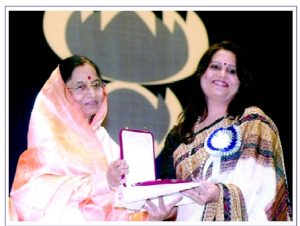
I think it’s no and yes at the same time as I believe, there are stories I have wanted to tell through cinema that I consciously held back, not because they lacked truth, but because society was not yet ready to listen without prejudice. Some stories touch raw nerves. They question power structures, expose everyday hypocrisies, and speak of women’s choices, desires, and freedoms in ways that still make people uncomfortable. As a filmmaker, you constantly measure not just what you want to say, but how much society is willing to hear. Sometimes resistance does not come openly; it comes as silence, denial, or selective outrage. I have learned that timing matters. A story told too early can be misunderstood, misused, or silenced altogether. That does not mean abandoning it. It means protecting it until the soil is ready. As we say in Odia,
“SABU KATHAARA NIJASWA SAMAYA ACHI, NIJASWA GATI ACHI”
It means – Everything has its own time and its own pace.
Only the one who walks the path understands its rough turns. I carry those untold stories with me. They live in my writing, in my silence, and in my patience. I believe the right moment will arrive, because society does evolve, slowly but surely. When it does, those stories will find their voice, stronger, deeper, and impossible to ignore.
THE MORAL-:
Q12-Any remaining ambitions of your life which you still want to fulfil?
DR ITIRANI SAMANTA-
There are so many things in life. I wouldn’t say I am ambitious, rather, I would say I have many dreams to fulfill. Not to demand, not to quarrel with everyone to achieve them at any cost, but simply to dream. I always dream of thinking and going beyond the box, of doing something new, and at the same time believing in BHAAGYA, BHAGABAN, KARMA (destiny, God, and karma).
“MATE BAHUT BHALA LAAGE, ISHWARANKA HAATA DHARI CHAALIBAKU EBANG MU CHAAEN ISHWARA MO HAATA DHARI JETEBELE, JUAADE MATE NEIJIBE, MU SEMITI CHAALIBAKU CHAAINBI | ARTHAT ISHWARA JETEBELE JEUN KAAMA DHAREIBE, SE KAAMA KHUSHI RE KARIBI EBANG MATE JETEBELE JEUN KAAMA KARIBAKU MILIBA, MU JAANIBI EHI SUJOGA MATE ISHWARA DEICHANTI EBANG TAAHA HIN ISHWARANKA ICCHA |”
It means – I feel very peaceful walking while holding God’s hand, and I wish that whenever God holds my hand and leads me wherever He chooses, I will willingly walk along that path. That is to say, whatever work God entrusts me with, I will do it with happiness. And whenever I receive an opportunity to do any work, I will know that this opportunity has been given to me by God, and that itself is God’s will.

15 Comments
Truly inspiring to see how Dr Samanta transformed her hardship into a legacy that uplift others
loved by reading about a journey from adversity to empowering communities through culture and education. A reminder that struggle can shape strength.
Truly inspiring to see how passion and perseverance can transform hardship into heritage!
A beautiful tribute to a literary icon whose work champions culture and women’s voices
Loved this — such an incredible journey from humble beginnings to cultural impact.
Her dedication to literature and heritage is deeply motivating
An inspiring read — proof that adversity can fuel creativity and change
Dr. Samanta’s life is a celebration of strength, heritage, and purpose
Her work promoting Odia heritage and writing is truly invaluable.
So motivating to read about someone who turned hunger into heritage
Her contributions to literature and film are remarkable and uplifting
Such a rich blend of culture, courage, and creativity in one life story
A powerful story that deserves to be read by everyone seeking inspiration
This piece brought so much insight into her multifaceted contributions — amazing
Humbled by her journey from struggle to success — thank you for this article